
This year marks ACP’s 25th year accelerating MS research. Over that time, our work has focused on strengthening how research actually gets done — supporting scientists with high-quality biosamples and data, helping researchers synthesize findings across hundreds of ACP-supported studies, and bringing people with lived experience into conversations about how research questions are prioritized and studies are designed.
These pieces come together to ensure research moves faster and in more meaningful directions. Read on to learn how a question raised by a member of our iConquerMS people-powered network exposed a gap in the evidence and prompted a new examination of the research — exactly the kind of progress our infrastructure is built to support.
WHERE WE’RE SHOWING UP
ACTRIMS: Carrying research priorities into the field
In early February, ACP will be at the ACTRIMS Forum, one of the most influential scientific meetings shaping the direction of MS research.
We’ll be there to present a research agenda shaped by priorities identified through iConquerMS — Accelerated Cure Project’s people-powered research network — intentionally centering people who have been historically underrepresented in MS research.
We’ll also be meeting with current and prospective research partners, engaging directly with new findings in the field of MS and hosting discussions around launching studies to connect emerging science with gaps identified by the MS community.
 ACP on RealTalk MS
Shortly after ACTRIMS, ACP’s Sara Loud, Hollie Schmidt, and Stephanie Buxhoeveden will join host Jon Strum on the RealTalk MS podcast to synthesize key themes from the conference and discuss how emerging conversations may shape MS research going forward.
We’ll share the episode once it’s available.
RESEARCH GAPS IN FOCUS
How one woman’s menopause question is reshaping MS research
Menopause is a near-universal life transition for women with MS — yet it remains one of the least examined phases in MS research.
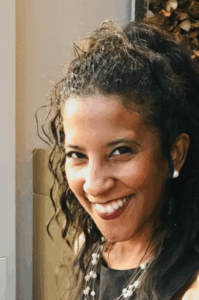
This gap came into focus after iConquerMS community member Dawn Morgan raised a question about how menopause is addressed in MS research and care. Working with Accelerated Cure Project and the iConquerMS Women’s Health Committee, that question led to a comprehensive review of the scientific literature—and it was through that review that the blind spot became clear.
The resulting scoping review, published in Maturitas, found that while menopause appears to be a meaningful inflection point in MS, research has largely measured biological changes without exploring women’s lived experiences. Of 19 studies reviewed, none used qualitative methods to understand how women experience this transition or navigate care.
Read the full story to learn what the research shows, what it’s missing, and how community-driven questions are shaping what comes next in MS research.
PARTICIPATE IN RESEACH
New study for MS-related muscle stiffness and spasms
Spasticity—the muscle stiffness, spasms, and pain that many people with MS experience—can disrupt daily activities and sleep.
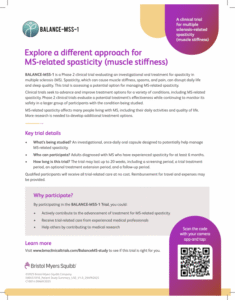
BALANCE-MSS-1 is a Phase 2 clinical trial sponsored by Bristol Myers Squibb testing whether an investigational once-daily oral medication can help manage these symptoms.
The study is looking for adults with MS who have experienced spasticity for at least 6 months.
Participation lasts up to 20 weeks including screening, treatmentand follow-up periods. All trial-related care is provided at no cost and travel reimbursement may also be available.
By participating, you’d contribute to the advancement of treatment for MS-related spasticity while receiving care from experienced medical professionals.
Learn more about the BALANCE-MSS-1 study below and see if you’re eligible.
COMMUNITY IMPACT
102.5 miles for MS research
Grayson, an ACP volunteer, set out to run 100 miles and raise $2,500 for MS research. He finished his ultra marathon in 31 hours and 40 minutes—beating his goal time by 3.5 hours—and crossed the finish line having raised nearly $2,900.
When asked about the accomplishment, Grayson said he was more excited about surpassing his fundraising goal than his race goal.
That’s the kind of commitment that fuels this work—and why we’re optimistic about what the next 25 years will bring.

Get in touch
We want to hear from you. What questions are you seeing — or asking — right now? Hit reply and tell us what’s on your radar.
Building together
Your support helps us connect more community voices to groundbreaking research.
Support our work