
- STORY HIGHLIGHTS
- One-third of women with MS are going through or past menopause, yet little research has examined how this major life transition affects their MS symptoms and daily experience.
- iConquerMS community member Dawn Morgan raised this issue, then led a peer-reviewed scoping review published in Maturitas showing that while menopause is a turning point for women with MS, almost no studies have explored women's actual experiences.
- The iConquerMS Women's Health Committee is working to fill these gaps through patient-powered research driven by the questions women are asking.
When a community question exposes a research blind spot
One-third of women living with multiple sclerosis are currently peri- or postmenopausal. Yet despite how common this life stage is, research has offered surprisingly little insight into how menopause shapes MS symptoms, disease progression, or day-to-day experience.

At ACP, we first became aware of this gap when Dawn Morgan, a woman with MS and member of iConquerMS (our patient-powered research network), raised the question with us. She and other women in the community told us menopause was a critical—and confusing—transition, yet clinicians and researchers weren’t adequately addressing it. Her experience pointed to a broader issue: menopause is often overlooked in MS research, even as women age into this transition.
What the evidence shows—and what it misses
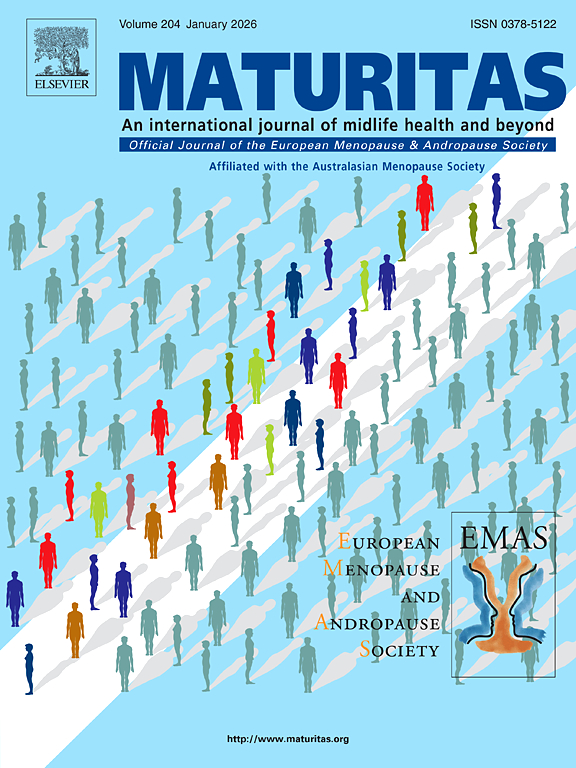
The result is a new scoping review, published in Maturitas, that synthesizes every peer-reviewed study published between 2018 and 2025 examining menopause in women with MS.
The question was taken up by the iConquerMS Women’s Health Committee, a group of researchers, clinicians, and community representatives working within Accelerated Cure Project (ACP), home of iConquerMS. We supported Dawn—now a researcher herself—to lead a comprehensive scoping review, just published in Maturitas. She and her collaborators synthesized every peer-reviewed study from 2018-2025 examining menopause in women with MS.
The findings confirm what our community already knew: research has been measuring symptoms but not listening to women’s experiences.
This is exactly why centering lived experience in research matters: patients often identify critical gaps long before the research community does.
The result is a new scoping review, published in Maturitas, that synthesizes every peer-reviewed study published between 2018 and 2025 examining menopause in women with MS.
The findings point to menopause as a meaningful inflection point in MS. After menopause, relapse rates tend to decline—yet markers of neurodegeneration increase. Women experience worsening functional decline, faster brain atrophy, and intensifying symptoms that overlap with both MS and menopause, including fatigue, cognitive changes, mood shifts, and urinary issues.
At the same time, the review reveals a research landscape constrained by inconsistency. Studies vary widely in how menopause is defined, and many struggle to separate the effects of hormonal change from normal aging.But the most striking gap is not biological—it’s human.
Of the 19 studies included in the review, none used qualitative or mixed-methods approaches. None explored how women actually experience this transition: how they interpret overlapping symptoms, navigate treatment decisions, or communicate with healthcare providers about what’s changing in their bodies.
In other words, the literature offers biological markers and disability scores—but almost no insight into lived experience. One study found that 67% of menopausal women with MS had never discussed their symptoms with a provider. The reasons remain unknown.
Why this gap matters
Without lived experience, research risks missing what matters most—how people make decisions, where care falls short, and what support is actually needed during this life stage. These gaps affect not only research design, but clinical understanding and care across the MS lifespan.
This is exactly where iConquerMS is designed to operate.
iConquerMS exists to ensure that research questions reflect real life, and that community-identified priorities inform rigorous, peer-reviewed science. The menopause and MS review is one example of that model in action: a question raised by a community member, examined by a multidisciplinary committee, and translated into evidence that can shape future research.
What comes next
The iConquerMS Women’s Health Committee is actively advancing work at the intersection of MS, menopause, and aging. The gaps identified in this review point to clear opportunities for future study, including:
• In-depth studies that listen to women’s experiences—through interviews and conversations, not just surveys—to understand how women navigate overlapping symptoms, make treatment decisions, and communicate with their healthcare teams
• Long-term studies using standardized frameworks for defining menopausal stages (like STRAW+10, which stages reproductive aging based on menstrual patterns and hormone levels)
• Clinical trials testing treatments that address hormonal changes, lifestyle factors, and symptom management strategies tailored to menopausal women with MS
• Research exploring the biological mechanisms that separate the effects of menopause from normal aging in MS progression
If you are a researcher working in—or interested in—menopause, aging, or MS progression, ACP and iConquerMS welcome collaboration. Closing these gaps will require approaches that integrate biological insight with lived experience—and partnerships that reflect the full complexity of people’s lives.
Read the full review here.
Interested in collaborating? Contact ACP Chief Scientific Officer Stephanie Buxhoeveden.