


ACP is launching two new studies: one on aging with MS and one on menopause with MS. Both address questions that have gone too long without answers. We look forward to partnering with this community to find them.
NEWLY FUNDED PROJECTS
DISCO-MS raised important questions. Let's explore them together.
DISCO-MS was the first large-scale trial to evaluate DMT discontinuation in stable older adults with MS, and its findings have opened a genuinely complex conversation. Relapse rates were low. Most observed disease activity was subclinical. People who discontinued treatment reported notably higher satisfaction. And yet the trial didn’t confirm that discontinuation was as safe as continuing. These are findings worth working through together.
ACP has received PCORI funding to support exactly that kind of collective sense-making, bringing together experts from across the field as partners in the process. Two virtual convenings will bring together older adults with MS, care partners, clinicians, researchers, and advocacy leaders to interpret the evidence together, synthesizing DISCO-MS alongside other studies on DMT de-escalation and aging in MS. The goal is to produce something the field is missing: plain-language shared decision-making resources, a consensus statement, and a prioritized research agenda for aging and DMT use in MS.
If this is your space, we want you in the room. Reach out to ACP Chief Scientific Officer Stephanie Buxhoeveden at sbuxhoeveden@acceleratedcure.org.
A new study takes on the menopause and MS research gap
MS affects women two to three times more often than men. Menopause meaningfully affects MS symptoms and disease course. And yet there is almost no research on how women actually experience that transition or what they need from their care teams during it.
That gap is now being addressed. ACP conducted a scoping review led by iConquerMS member Dawn Morgan and in collaboration with the broader iConquerMS community. That review serves as the basis for a newly funded National Multiple Sclerosis Society study, led by Alexandra Simpson, MD, MA, at UVA Health, with ACP as operational and community engagement lead.
The study will survey and interview both women with MS in the menopausal transition and their healthcare providers. If you’re working in women’s health or have people in your care who might be eligible, we’d love to connect. Reach out to Stephanie Buxhoeveden at sbuxhoeveden@acceleratedcure.org.
FUNDING OPPORTUNITY
CDMRP Announces FY2026 MS Research Program Funding
The Congressionally Directed Medical Research Programs (CDMRP) has announced anticipated funding opportunities for the FY2026 Multiple Sclerosis Research Program (MSRP). Award mechanisms range from early investigator grants to larger clinical trial awards, with funding up to $2M across focus areas including CNS repair, disease progression, symptoms and their treatment and management, and MS etiology.
Full announcements will be posted to Grants.gov when available. Investigators are encouraged to begin planning now.
ACP has proven success as a CDMRP collaborator. Our CAFE‑MS study, the largest trial of a digital intervention for MS‑related fatigue, was awarded CDMRP funding through iConquerMS, and we know how to support a competitive submission. Through the ACP Repository and iConquerMS, we can bring biosamples, data from 3,200+ participants, and real-world perspectives from a network of 10,000+ people affected by MS to your study. Whether you’re building a letter of intent or developing your full application, we’d welcome the conversation about how we might help strengthen your submission.
Reach out to us at partner@acceleratedcure.org.
FUNDING OPPORTUNITY
Research Priorities, Defined by the Community
What does the MS community most want researchers to study? The answers might surprise you.
Through the PRADA project, iConquerMS members identified and ranked their top 10 research priorities having to do with MS symptoms and their treatment and management. The result is a community-defined agenda that points directly to where research could make the biggest difference — and some of the priorities that rose to the top aren’t the ones you might expect.
For researchers thinking about their next study, this list is worth a look. Reach out at partner@acceleratedcure.org to explore the priorities and discuss how ACP’s Repository and iConquerMS network can support research that addresses them.
SCIENCE, TOGETHER
How ACP’s Repository helped spark a $1.9M NIH-funded MS project that could transform how disease activity is measured and treated
Scientific progress rarely happens overnight. In multiple sclerosis research, ideas explored in academic labs can take years to evolve into meaningful advances, but when they do, the path forward is almost always built on sustained collaboration.
More than ten years ago, Chase Spurlock, PhD, then a researcher atVanderbilt University, was exploring what RNA found in the blood might reveal about MS biology. His work was supported by access to biosamples and
clinical data from the ACP Repository, allowing him and his colleagues to investigate biological signals that were not yet well understood.

More than a decade later, that research has grown into an active› NIH-funded program built on deep collaboration across academia and industry. Spurlock is now CEO and Co-Founder of Decode Health, a Nashville-based precision medicine analytics company, which recently received a $1.9 million Phase II Small Business Innovation Research (SBIR) grant from the National Institutes of Health to advance exactly this line of inquiry. ACP is a named collaborator on the project, continuing a partnership that stretches back to those first Vanderbilt studies.
The work addresses a real gap in how MS is managed today. Clinicians typically rely on symptoms, MRI scans, and broad diagnostic categories to gauge how MS is progressing in a person — tools that are valuable but imprecise. Biomarkers, molecules that can be used to monitor disease progression, have been investigated by other groups, including previous partners of ACP, for some time. RNAs, particularly non-coding RNAs, a focus of the Decode research, provide some advantages over other biomarkers.
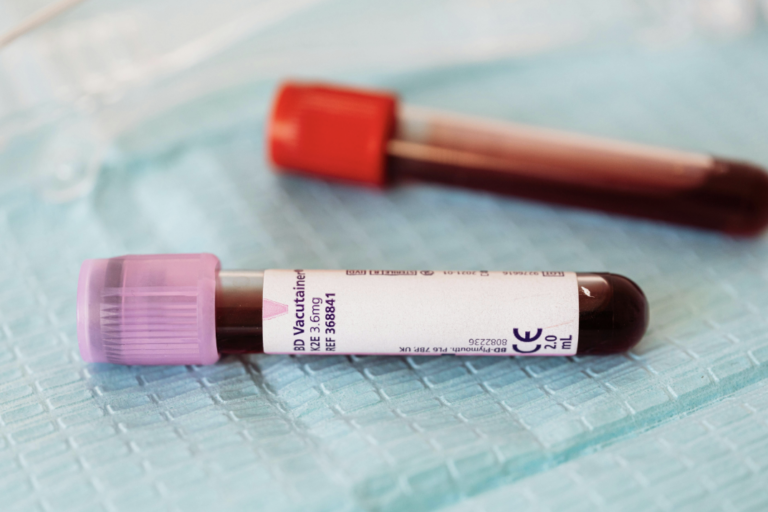
Decode Health’s project will study whether RNA signals drawn from a single tube of blood, analyzed through an AI-driven platform, can provide a more objective, real-time picture of MS disease activity. Vanderbilt University Medical Center and the University of Miami Miller School of Medicine are among the collaborators lending scientific and clinical expertise to Decode’s broader biomarker discovery effort.

ACP’s contributions to this work have spanned more than a single study. Over the course of the partnership, Repository samples and integrated clinical data were instrumental in validating the initial concept that RNAs are biomarkers with significant advantages over other molecules. Recent Decode research results were presented at the 2026 ACTRIMS conference in San Diego. In this study, additional Repository samples from individuals with relapsing remitting MS and neuromyelitis optica (NMO), along with controls obtained by Decode, were used to profile coding and non-coding RNAs associated with plasma neurofilament light chain (NfL) levels. This subsequently led to the identification of lipid and lipoprotein pathways that are important for blood-brain barrier integrity, immune cell trafficking and remyelination—processes that underpin disease progression and recovery in demyelinating disorders.
For ACP, being part of this project is a natural extension of what the Repository was built to do. Shared biospecimens and integrated data don’t just support individual studies; they lay a foundation for other researchers to build on. In this project, ACP will continue to provide samples, along with patient clinical and phenotype data, to accelerate biomarker research with open access data sharing.
Spurlock says the journey from those early studies to a funded NIH project is exactly the kind of arc he hoped for.
"It's hard to believe it's been more than a decade since the early RNA work at Vanderbilt that ACP helped support,” said Spurlock. “What excites me most is seeing that foundation evolve into something that could directly inform how MS is measured and treated. I believe in ACP's mission, because it bridges long-term discovery and real-world impact, and this project is proof that the model works."
Spurlock now serves on ACP’s Scientific Steering Committee and contributes to iConquerMS research initiatives, working to ensure that the unmet needs of people affected by MS are understood and addressed by research.
For people living with MS, the promise of a simple blood test that can track disease activity in real time is more than a scientific milestone. It’s the kind of progress that could change conversations between people and their doctors and bring the field closer to truly personalized care — and it’s what this collaboration is helping to make possible.
Would your research benefit from access to biosamples and data? Reach out to us partner@acceleratedcure.org to learn more.
CONFERENCE SEASON
Meet ACP on the road
We’ll be at AAN, CMSC, BIO and ECTRIMS this year, and we’d love to connect.
Whether you’re interested in learning more about our programs, exploring a collaboration, or just putting a face to a name, send us an email at Partner@AcceleratedCure.org to set up time to meet.
What ACP brings to your research
From data access to inclusive engagement, ACP offers research-ready resources designed to support MS research across the full lifecycle.
ACP Repository
Blood-derived biosamples, clinical data, and self-reported data contributed by 3,200+ people living with MS, along with returned results from 150+ prior studies.
iConquerMS
A network of 10,000+ people affected by MS who contribute data, biosamples, and real-world insights to help shape people-powered research from design through dissemination.
MS Minority Research Engagement Partnership Network
A multi-stakeholder network focused on identifying and dismantling the structural barriers that keep underrepresented communities out of MS research.
RIDE Council (Research Inclusion, Diversity and Equity Council)
A consulting group of approximately 30 people living with MS from historically underrepresented communities. Available to partner with researchers and organizations on research priorities, study design, materials review, recruitment, and dissemination, bringing lived experience to research at every stage.
Let's talk about your research
Whether you’re exploring a new idea or advancing an active study, we’re happy to discuss how ACP’s resources might fit your work.
ACP Repository samples and data
David Gwynne, dgwynne@acceleratedcure.org
iConquerMS, inclusive research, and other topics
Hollie Schmidt, hollie@acceleratedcure.org
Women’s health and aging in MS studies
Stephanie Buxhoeveden, sbuxhoeveden@acceleratedcure.org
Not sure who to contact?
Email partner@acceleratedcure.org, and we’ll ensure your message arrives at the right place.