
Clinical trials are essential for determining the safety and effectiveness of new medicines, but minorities are often underrepresented, making up less than 10% of participants. People of different ages, gender identities, disability levels and locations are often left out, too. This lack of diversity means research findings may not fully apply to these groups. Mistrust, rooted in a history of unethical research practices and a general lack of confidence in healthcare systems, has contributed to low participation.

The Tuskegee Syphilis Study is considered the worst case of unethical human research in U.S. history. Conducted by the U.S. Public Health Service, it involved 600 low-income African-American men – 400 with syphilis – who were monitored for 40 years without being told they had the disease. Although free medical exams were provided, treatment was deliberately withheld even after penicillin became available. Participants were never informed they were part of a study. As a result, many died, infected their wives, and passed congenital syphilis to their children. The study was finally halted in 1973, and in 1997, President Clinton issued a formal apology to participants and their families. Yet, mistrust of clinical research persists among many African Americans today.


During World War II, German physicians conducted medical experiments on thousands of concentration camp prisoners without their consent, leaving most either dead or permanently disabled. After the war, some of those responsible were brought to trial in Nuremberg, Germany. These trials led to the creation of the Nuremberg Code in 1948 – the first international document requiring that research participants give informed consent and that the potential benefits of research outweigh its risks.
In the late 1950s, thalidomide was approved as a sedative in Europe but not by the U.S. Food and Drug Administration (FDA). It was prescribed to manage sleep disturbances and nausea during pregnancy, but was soon found to cause severe fetal deformities. Many patients were unaware they were taking an unapproved drug and had not provided informed consent. Approximately 12,000 infants were born with serious birth defects, leading to the passage of the Kefauver Amendments, which required manufacturers to demonstrate a drug’s effectiveness to the FDA prior to marketing.


In the 1960s, hepatitis experiments were conducted on mentally disabled children at Willowbrook State School in Staten Island, N.Y., with approval from the New York Department of Health. Researchers intentionally infected children to study the disease’s progression, arguing that infection was inevitable. However, only children whose parents consented to participation were admitted to the school, making the consent process ethically coercive.
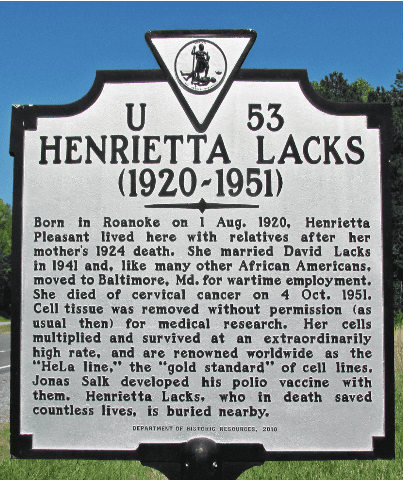
Henrietta Lacks, a poor African-American mother of five, died of cervical cancer in 1951. Before her death, researchers at Johns Hopkins University collected tissue from her cervix without her consent. They discovered her cells could survive and multiply in the lab, leading to the creation of the HeLa cell line – a major breakthrough that fueled medical research and generated billions of dollars. Lacks never consented to the use of her cells, and her family remained unaware for years. Later, scientists collected the family’s blood to map HeLa genes, again without proper consent. Despite these ethical breaches, the Lacks family continues to support scientific research. Today, HeLa genome access is restricted under a National Institutes of Health agreement, with Lacks family members helping to oversee its use and researchers required to acknowledge them in publications and presentations.

In 1964, the World Medical Association developed the Declaration of Helsinki, a set of ethical principles that form the foundation of today’s Good Clinical Practices. It requires informed consent, limits research to studies where the potential benefits outweigh the risks, and mandates that qualified individuals conduct research based on prior laboratory and animal studies. The Declaration also calls for independent review of research protocols, leading to the U.S. requirement that all human studies be approved by an ethics committee or Institutional Review Board (IRB).
In 1974, Congress passed the National Research Act, creating the National Commission for the Protection of Human Subjects of Biomedical and Behavioral Research. The Commission was tasked with identifying ethical principles for research involving human subjects and developing guidelines for their protection. This work produced the Belmont Report, which defined three core principles: respect for persons, beneficence, and justice. Respect for persons underpins today’s informed consent process, requiring participants to be fully informed and able to choose freely. Beneficence demands that research maximize benefits and minimize harm, while justice requires the fair selection of research subjects. These principles continue to guide human subjects research today.


The Common Rule, adopted in 1991, sets federal standards for protecting human research participants. It requires informed consent, IRB review for safety and fairness, and special protections for vulnerable groups like children, prisoners, and pregnant women. Research involving drugs, medical devices, or private health information must also comply with FDA and HIPAA regulations, which require evidence of safety and effectiveness, and strict protection of personal health data.
The Common Rule was developed when research was mainly conducted at single universities or medical centers, but research has since expanded in scale, diversity, and digital complexity. In 2017, the U.S. Department of Health and Human Services and 15 other federal agencies updated the regulations with the Final Rule to better fit today’s research environment. The changes made consent forms easier to understand, required researchers to explain if data or samples might be used in the future, and allowed broad consent for future use. Low-risk studies may not need full review, and research at multiple sites can now use just one IRB. Overall, these changes protect participants while making research easier to manage.

While the history of clinical research is marked by serious ethical failures, it has also driven important reforms that now protect research participants. Stronger regulations, greater transparency, and ongoing community engagement efforts have laid the foundation for rebuilding trust. Yet, improving diversity in clinical trials remains an urgent priority. Programs like ACP’s MS Minority Research Engagement Partnership Network (MREPN) are a critical step forward, helping to ensure that research is more inclusive, respectful, and representative of everyone it aims to serve. By continuing to learn from the past and committing to meaningful change, we can create a future where individuals from all communities are equally heard, respected, and empowered in clinical research.