A name that fits.
This newsletter finally has a name: Accelerate — because MS research can’t wait. We connect researchers with the data, people, and insights they need, and ensure those living with and affected by MS have a real voice in shaping the research that impacts their lives.
Every issue is part of that effort: keeping you informed, connected, and in the loop on work that this community makes possible.
RESEARCH SPOTLIGHT
What should older adults with MS know about stopping their medication?

If you’ve been living with MS for a long time, you may have wondered whether you still need to keep taking your medication — especially if your disease has been stable for years, or side effects have become harder to manage. It’s a question more people are asking, and until recently, there was almost no research to help answer it.
Accelerated Cure Project for MS (ACP) has been awarded funding through the Eugene Washington PCORI Engagement Award Program, an initiative of the Patient-Centered Outcomes Research Institute (PCORI), to lead a new project focused on exactly this question. The project builds on the DISCO-MS randomized controlled trial, the first large-scale study to evaluate stopping DMTs in stable older adults with MS.
While the trial did not confirm that stopping therapy was as safe as continuing it, relapse rates were low, most observed disease activity showed up on scans without causing noticeable symptoms, and patient satisfaction was notably higher among those who discontinued therapy. Those findings are now entering clinical and patient conversations, and accurate interpretation is essential. Nuanced trial results can be difficult to translate into practice without the kind of contextual scaffolding this initiative is designed to provide.
ACP will bring together older adults living with MS, care partners, clinicians, researchers, and advocacy leaders to interpret this evidence together and co-develop plain-language resources for patients and clinicians. Patients and caregivers will be active participants in shaping how findings are communicated.
Learn more about the new project here.
PERSPECTIVE
What I learned from aging twice
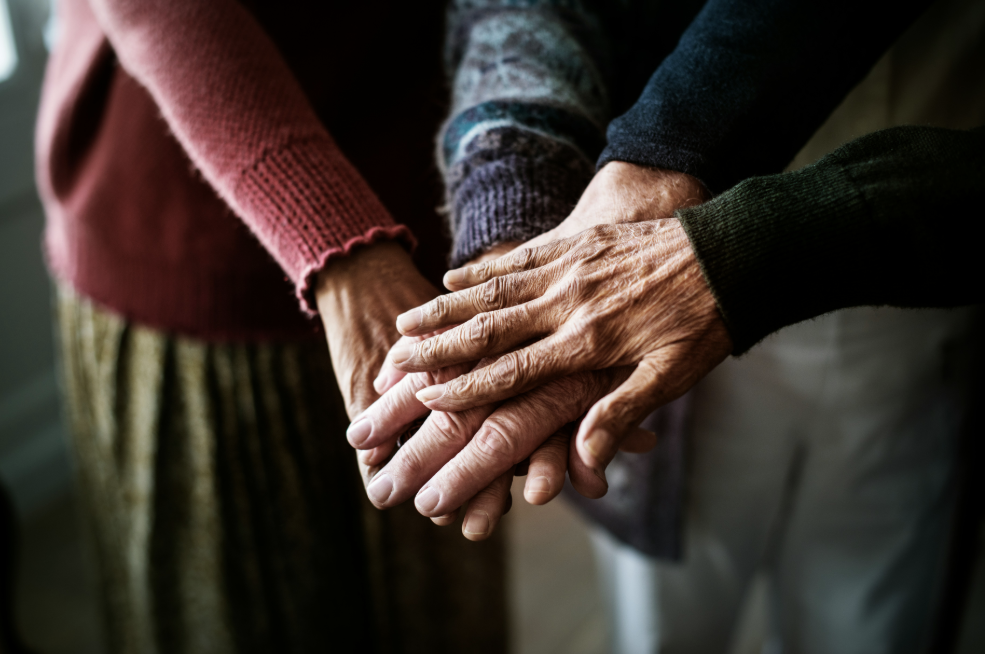
A personal essay by iConquerMS member Elizabeth Jameson
Excerpted and adapted from The Washington Post, with permission.
I’ve struggled with progressive multiple sclerosis for half a lifetime — since my 30s. With it came accoutrements of getting old: first a cane, then a walker, then a scooter and finally a wheelchair.
Today, I’m in my 70s and “aging” in the classical sense, with the thinning hair and aches and pains that come with it. But far from this making my disability more painful and isolating, I’ve discovered a sense of joy I didn’t expect.
I was a young mom when I lost the ability to speak midsentence, pushing my sons on the swings. A scan revealed brain lesions and the diagnosis: MS. It reshaped my life — my career, my independence, my identity. I left my job as a public interest lawyer, as I slowly lost the use of my legs, then my arms. Today, I’m quadriplegic. I rely on caregivers and assistive technology to move, speak and write.
Back then, no one around me was going through anything similar. In my circle of young mothers, everyone else bonded over hikes and playground adventures. At that time, I still used a walker and could have kept up — at least on slower walks — if invited. But it seemed there was no interest in including me. Social time was fitness time. And I didn’t fit.
Now, though? Now things are different. Aging has caught up with all of us. Friends are managing cancers and hearing loss, knee replacements and hand tremors. The hikes are shorter. The group sits around the picnic table and talks. We talk about politics, our days and what the future looks like. We also compare medications. We listen to one another. I’m no longer the only one with limitations. Aging brought me company and has become a bond.
This collective aging is more than a comfort — it’s physically protective. A major peer-reviewed study published last year found that older adults who became more socially isolated over time had significantly higher rates of disability and premature death, even when adjusting for other health issues. In other words, connection isn’t just life-affirming; it’s life-sustaining.
Discovering my need for community helped prepare me for the second round of aging: the one that arrived with time.
I now gather annually with a group of women I met decades ago — fellow lawyers, most of us mothers, all of us originally drawn together by our shared passion for justice. At first, I was an outlier. And I didn’t talk about my condition much. I didn’t know how.
But slowly, that changed. Arthritis, disease, loss — they came for all of us in time. And with them came increasing openness. We started talking about hardships more: grief, meds, memory lapses, mobility aids.
It’s not that my MS-related problems have abated. But now such ordeals are less remarkable, given my friends’ various health problems. My condition is finally blending into the background — or at least, I don’t feel as though it’s the elephant in the room.
Aging well, I’ve learned, isn’t about staying young forever. It’s about acceptance, recognition and what I’ve come to see as a universal grief: We all want our bodies to last, to look like they did when we were 25. Instead, what we get, if we’re lucky, is a learned gratitude for being alive.
After all these years, there’s joy in realizing that I’ve finally located the source of my strength: It’s friends, it’s family, it’s wider community. I hope they also find strength in sharing with me.
Aging is inevitable, but isolation isn’t. We don’t have to suffer in silence or alone. We can reach out, trade stories and hold each other up. It won’t cure the pain. But it might ease it.
And in that easing, we might find what matters most.
This piece was written with assistance from Lucia Graves.
Editor’s note: Have a story, poem, artwork, or photograph to share with our community? This section is yours — reach out to Cristal Balis at cbalis@acceleratedcure.org.
RESEARCH OPPORTUNITY
Can exercise improve mood in MS? Volunteers needed for new study
Researchers at the University of Illinois Chicago are recruiting volunteers for a new clinical trial exploring the connection between exercise and mood in people living with multiple sclerosis.
The Mood and Exercise Training Study for MS will test a remotely delivered 4-month exercise training program, followed by a 4-month follow-up period. The study is designed for people with MS who have experienced symptoms of low mood or depression.
Participation is fully remote, making it easier to take part from home.
Interested in learning more or seeing if you qualify? Learn more: Mood and Exercise Training Study flyer (PDF).
Contact the Exercise Neuroscience Research Lab at 1-833-413-0280 or METSforMS@uic.edu.
VOICES
"Making sure we're not invisible": A conversation with RIDE Council member Melinda Livermont
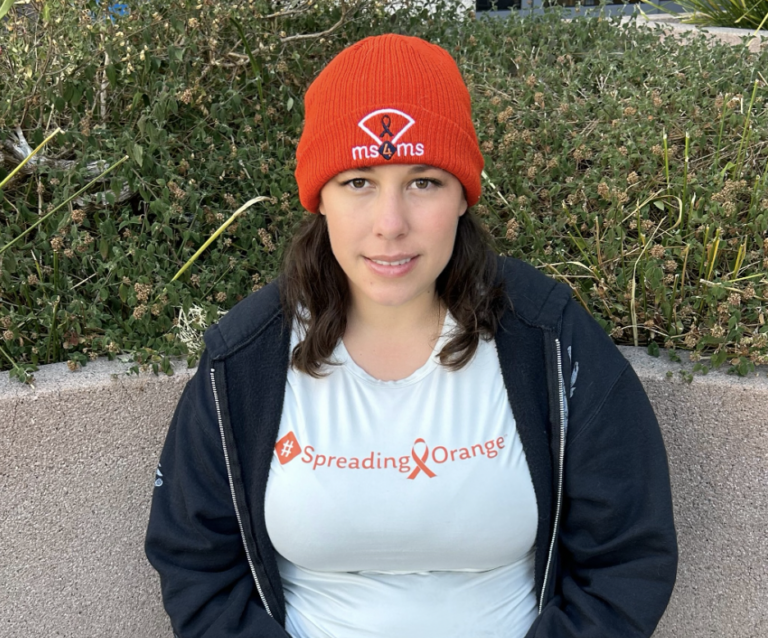
Melinda is a member of the RIDE Council — iConquerMS’s patient advisory group focused on research inclusion, diversity, and equity — as well as a research participant and advocate for Native American and Alaska Native MS patients. She lives on a reservation, belongs to two tribes, and is turning her personal experience with MS into a force for change.
You were already participating in iConquerMS as a research contributor. What made you want to take on a bigger role with the RIDE Council?
I noticed that there wasn’t much data about the Native American and Alaska Native demographic, which deeply resonated with me. MS impacts Native communities significantly, but it’s rarely represented in research or discussions. I felt a responsibility to contribute my data and bridge that gap. It’s about making a difference where it matters most.
What’s a moment from your RIDE Council work that’s stuck with you?
Seeing the Emerging Voices group take off was a proud moment for me. Watching participation grow, especially among my specific demographic, has been incredible. What makes our RIDE Council special is that everyone is willing to take a piece of the work and run with it. We’ve come so far from where we started.
Native Americans are rarely represented in MS research. How does the RIDE Council start to change that?
By spotlighting these demographics and giving them a platform. It’s not just about funding. It’s about offering support and community to show patients they’re not alone.
What does it mean to you personally to participate in research?
Recently, a doctor performed a thyroid biopsy on me as part of a study. The team expedited the results, knowing how much it could mean to someone worried about their diagnosis. For me, it’s about trust. But for those who are deeply concerned, moments like that can be life-changing. Inclusive research ensures those experiences aren’t just for the few.
What would you say to someone who was just diagnosed and feels overwhelmed or alone?
Start with iConquerMS and explore the resources available there. I also run a nonprofit to connect people with organizations like the MS Society. It’s important to understand that while doctors might focus on worst-case scenarios, we have tools to manage and live fulfilling lives. Patients need to know they’re not alone and that help is out there.
Editor’s note: Are you a researcher, advocate, patient or caregiver with a story to tell about MS research — why you do it, what it means to you, or what you hope it leads to? We’d love to feature you in an upcoming issue. Reach out to Cristal Balis at cbalis@acceleratedcure.org.
COMMUNITY IMPACT
Music Strong: A benefit concert for ACP
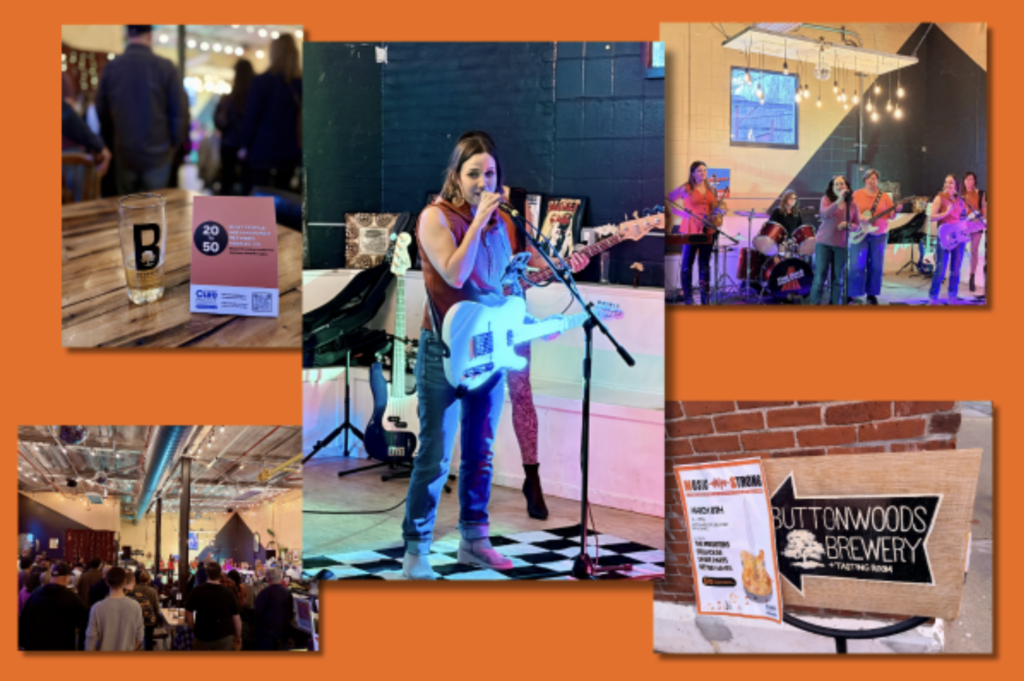
After a brutal New England winter, March 9 finally delivered: the first real warm day of the year. The crowd that filled Buttonwoods Brewery in Providence, R.I., made the most of it. Standing room only, cold beers in hand, they were there to fight MS.
The event was organized by ACP board member Kristy dosReis, who brought together a lineup of local bands for a late afternoon of live music and community, all in support of Accelerated Cure Project. Throughout the event, band members and community supporters took the mic between sets to share their personal connection to MS, why research matters, and how ACP’s unique approach to accelerating research fills a critical need for both the MS community and researchers. By the end of the night, the crowd had raised nearly $2500 for MS research.
ACP CEO Sara Loud took the stage before the final act to address the crowd, and afterward reflected on the night. “I was in awe of what Kristy put together. Every band up there took the time to make it personal—to share why this cause mattered to them. That’s people-powered research in action, and it’s exactly what ACP is built for.”
The night closed with the Better Halves, with DosReis playing guitar and contributing vocals. They brought the house down. “Playing that final set and looking out at a room full of people who showed up to support ACP and MS research was unforgettable,” said dosReis. “It proves that when a community comes together around a cause, it can make a real difference.”
The energy in the room reflected something that drives ACP’s work every day: people showing up, not just to learn about MS, but to do something about it. That kind of community-powered momentum is exactly what moves research forward.